
Day 1: Family Members and Introducing “mein/dein”
Overview
Self-Study Topic | Duration: 25–30 minutes
Level: Beginner
OBJECTIVE
By the end of this topic, you will be able to:
✔ Use family vocabulary.
✔ Use “my” and “your” to talk about relatives.
CONTENT
1. Self-check
Check how much you remember from last week:
- Describe furniture in your room using adjectives, colors, and “es gibt”.
- Talk about what you are wearing using the verb “tragen” and the accusative case.
Speak freely, without using notes.
Congratulations! You have now mastered more complex German!
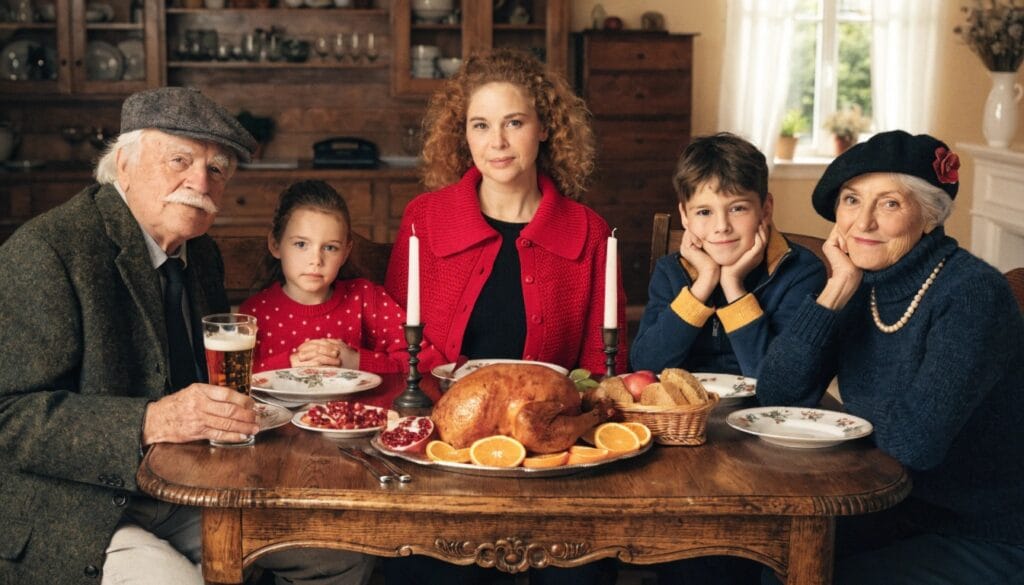
2. family members
Step 1: Warm-Up
Think & Write:
- How many people are in your family?
- Write down their relationship to you in English (mother, father, brother, etc.).
Step 2: Family Vocabulary
- Study this list.
- Listen to the audio clip to hear the correct pronunciation.
- Stop the audio clip and repeat until you have mastered the pronunciation.
- Learn the family vocabulary by heart.
| German | English | Pronunciation Tip |
|---|---|---|
| der Vater | father | “FAH-ter” |
| die Mutter | mother | “MOO-ter” |
| der Bruder | brother | “BROO-der” |
| die Schwester | sister | “SHVES-ter” |
| der Sohn | son | “Zohn” |
| die Tochter | daughter | “TOKH-ter” |
| der Opa / der Großvater | grandpa / grandfather | “OH-pa” / “GROHS-fah-ter” |
| die Oma / die Großmutter | grandma / grandmother | “OH-ma” / “GROHS-moo-ter” |
| der Onkel | uncle | “ON-kel” |
| die Tante | aunt | “TAHN-te” |
| der Cousin / der Vetter | cousin (male) | “koo-ZANG” (French pronunciation!) |
| die Cousine | cousin (female) | “koo-ZEE-neh” |
| das Kind | child | “Kind” |
| die Kinder | children | “KIN-der” |
Grammar Note:
Family members have genders! Notice:
- Most male relatives are der (Vater, Bruder, Sohn, Onkel, Opa)
- Most female relatives are die (Mutter, Schwester, Tochter, Tante, Oma)
- Das Kind is neuter.
Plural forms
- Study the table and listen to the recording.
- Learn the plural forms by heart.
| die Väter | fathers |
| die Mütter | mothers |
| die Brüder | brothers |
| die Schwestern | sisters |
| die Söhne | sons |
| die Töchter | daughters |
| die Opas / die Großväter | grandpas / grandfathers |
| die Omas / die Großmütter | grandmas / grandmothers |
| die Onkel | uncles |
| die Tanten | aunts |
| die Cousins | cousins (male) |
| die Vettern | cousins (male) |
| die Cousinen | cousins (female) |
| die Kinder | children |
Step 3: Practice
Exercise 1: Practice new vocabulary on Quizlet. You may need to create an account for full access.
Exercise 2: Drag and drop.
Exercise 3: Fill in the blanks
3. Introducing Possessive Pronouns: “mein” and “dein”
Step 1: Grammatical Explanation
- Possessive pronouns show ownership: my, your, his, her, etc.
- In German, they must match the gender of the noun they describe (just like “ein”)!
| English | German | Masculine | Feminine | Neuter | Plural |
| my | mein- | mein Vater | meine Mutter | mein Kind | meine Kinder |
| your (informal, singular) | dein- | dein Bruder | deine Schwester | dein Kind | deine Kinder |
Pattern:
- Just like “ein/eine/ein/eine”
- Add -e for feminine and plural
- No ending for masculine and neuter
Examples:
- Das ist mein Vater. (That is my father.)
- Ist das deine Mutter? (Is that your mother?)
- Mein Bruder heißt Paul. (My brother is called Paul.)
- Deine Schwestern sind nett. (Your sisters are nice.)
Step 2: Listen and repeat
Listen to the audio file, stop the recording if necessary, and repeat.
Step 3: Practice
Exercise 1
Exercise 2
Listen to our educational song and sing Along
4. Homework & Preview FOR TOMORROW
Homework
- Writing: Write a paragraph (6-10 sentences) describing your family and relatives. Use the possessive pronoun “mein/meine“. You can include the following information:
- Names and age
- Places of residence
- Pastimes and hobbies
- Speaking: Record a short video or audio (about 60 seconds) where you describe your family and relatives, using your written paragraph as a guide.
PREVIEW
Tomorrow, we’ll learn all the other possessives: sein (his), ihr (her), unser (our), euer (your plural), and ihr (their)—so you can talk about everyone’s family!
Family words are among the most meaningful vocabulary.
word of encouragement
You’re now able to talk about the people you love most—that’s real communication!